


BondbloX
3.68.00 Reviews
App Specs
- Version
- 6.70
- Updated On
- License
- Free
- Downloads
- 50,000+
- Developer
- BondbloX Pte. Ltd.
- Categories
- Finance
- Platform
- Android
Screenshots
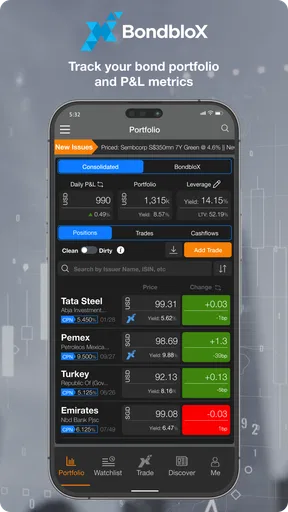
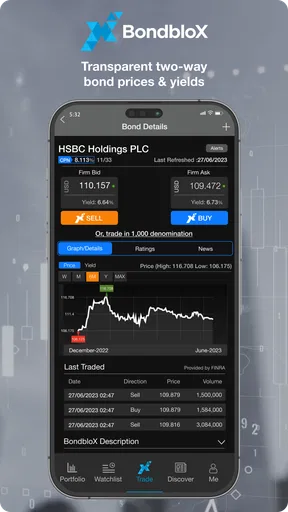
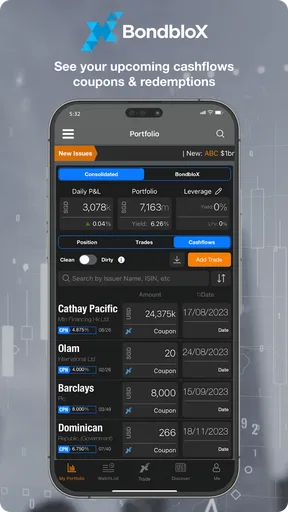
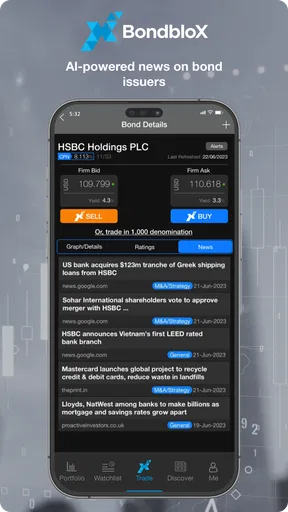
 Analysis by AppCompare
BondbloX is a finance app I would approach as a mobile window into bond trading, market information, and analytics rather than as a simple savings tool. I found its purpose more specialized than the average personal-finance app: it is aimed at people who want to examine fixed-income opportunities and related data while away from a desktop. That focus can be useful, but it also means the experience depends heavily on how comfortable you are with investment terminology and with checking live-looking information carefully before making a decision.
The app is developed by BondbloX Pte. Ltd. and is free to install, with optional in-app purchases shown at prices ranging from $21.99 to $59.99 per item. It is available for Everyone, and the Android listing supports devices running version 8.0 or later. Its current version is 6.70, while the project itself dates back to October 25, 2017. Those details matter because this is not a brand-new experiment: it has had time to develop into a dedicated bond-focused product, yet the relatively specialized audience explains why it feels less immediately familiar than a mainstream banking application.
How BondbloX feels when the network is doing the work
The central appeal is the combination of bond trading and market analysis in one place. When I have a stable connection, the app makes more sense as a quick research companion: I can open it with a particular question in mind, inspect the information available for a bond, and decide whether the opportunity deserves deeper attention. That is a different workflow from opening a banking app simply to check a balance. Here, the value comes from the quality and timeliness of what is displayed at the moment I need it.
This connection-first character changes how I would use it. I would not treat the app as a notebook containing a permanent copy of my research. Instead, I would use it before a meeting, during a commute with dependable mobile coverage, or at home while comparing several possibilities. A weak signal can turn a focused check into an exercise in waiting, and that matters more in finance than it would in a casual entertainment app. If a screen is missing current information or takes too long to load, I would rather pause than guess.
One practical habit is to open the app before leaving a reliable Wi-Fi connection and decide what I am actually trying to verify. For example, I might want to review a bond’s available information, compare it with another candidate, or revisit an earlier line of research. Having that question ready prevents aimless browsing and reduces the temptation to react to whichever item happens to appear first. The app works best as a decision-support workspace, not as a shortcut around investment research.
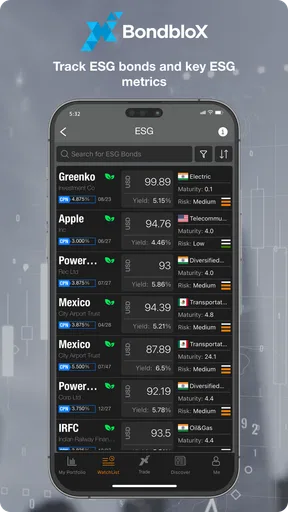
That distinction is especially important for newcomers. Bond terminology can look reassuringly precise while still requiring context: maturity, issuer quality, liquidity, currency exposure, and the difference between an advertised yield and the return an investor may actually achieve are not interchangeable ideas. BondbloX can help put bond-related information in front of me, but it cannot replace the judgment needed to interpret it. I would use its analytics to form better questions, not to turn a single number into an automatic buy signal.
Why mobile access is useful, and where it becomes awkward
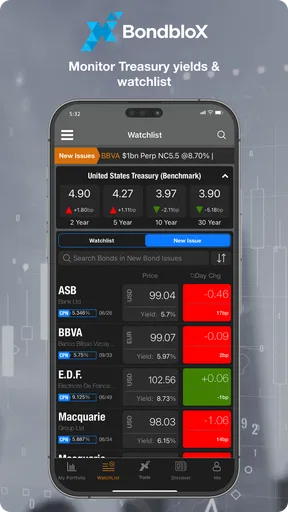
A phone is a convenient place to monitor a developing idea. I can check a detail while speaking with someone, revisit a watchlist-style research process if the app presents one, or use a short break to decide which opportunities deserve a longer session later. The smaller screen is less suitable for broad comparisons, though. Reading one item at a time may be comfortable, while holding several bonds in mind at once is more demanding than it would be on a larger display.
Worth Reading Before You Choose

EA SPORTS FC Mobile 26 Is a Bigger Football Game, but It Takes Time

Flipboard Shows What News Apps Must Do Beyond the Feed

Switching to Android Auto Means Rethinking Your Driving Routine

Google Calendar Makes a Crowded Week Easier to Manage

Ludo King Makes the Most of the Minutes Between Plans

Baby Panda World Brings Quick Play to Modern Phones, but Its Game Library Feels Busy
My preferred mobile workflow would therefore be deliberately split into two stages. I would use the phone for discovery and quick verification, then move to a larger screen or a written checklist for the final review. That approach also limits impulsive decisions. A compact interface encourages fast taps, but fixed-income investing rewards slowing down and checking the details that are easy to overlook when I am standing in a queue or moving between appointments.
There is a useful everyday scenario here. Imagine I am commuting and receive a message that a bond I have been following deserves another look. With a dependable connection, I can open BondbloX, inspect the relevant information, and note whether it is worth researching after work. If the train enters an area with poor coverage, I would not try to complete the process by memory. I would record the question elsewhere and return to the app once the connection is stable. That small discipline is more valuable than pretending a finance app can make unreliable connectivity harmless.
The app may suit an investor who already knows what they want to investigate. It is less convincing as a first lesson in bonds. A beginner looking for budgeting, bank transfers, spending categories, or a simple savings target would probably feel more at home in a conventional personal-finance app. BondbloX occupies a narrower lane, and its usefulness rises when the user already has a reason to examine bond markets.
What happens when loading fails or the session is interrupted
Finance apps deserve a cautious recovery routine because an interrupted screen can leave me unsure whether I am seeing current information, an incomplete view, or simply a page that has not finished loading. When BondbloX does not respond as expected, I would avoid repeating a transaction or making a decision immediately. I would first check the connection, wait briefly, and reopen the relevant area rather than tapping rapidly through the interface.
I would also keep a simple external note of the bond or research item I was reviewing. That is not a criticism of one particular screen; it is a sensible safeguard whenever the phone is being used as a gateway to market information. A note can contain the issuer name, the question I wanted answered, and the time I began the review. It does not need to hold sensitive account details. Its purpose is to let me resume calmly instead of trying to reconstruct my intentions after an interruption.
Another useful rule is to separate research from commitment. If the connection drops while I am browsing, I can treat the session as incomplete. I would not assume that a partially displayed figure is final, and I would not regard a button becoming unresponsive as proof that an action succeeded or failed. I would confirm the state through the app once access returns and, where appropriate, use the normal account or transaction records available to me. This is a more reliable habit than relying on a notification alone.
Travel makes this issue more obvious. Hotel Wi-Fi, underground transport, crowded public networks, and roaming connections can all behave differently from the stable network used at home. I would avoid doing important bond research for the first time in those conditions. A better approach is to prepare the questions in advance, use BondbloX for the parts that load properly, and postpone anything that requires certainty until I can reconnect. The app remains useful in a mobile setting, but mobility should not be confused with guaranteed continuity.
Using data carefully on a small screen
BondbloX presents itself around bond trading, data, and analytics, so the main challenge is not merely finding information; it is deciding which information deserves attention. On a phone, numbers can appear visually prominent even when their meaning depends on surrounding context. I would read the labels, compare like with like, and avoid treating a single attractive figure as a complete picture of risk or suitability.
A concrete technique I would recommend is the “three-question pause.” Before acting on an item, I would ask what the figure measures, what period or condition it relates to, and what could make it change. I would then ask whether the bond fits my own time horizon and risk tolerance. This takes longer than scanning a headline number, but it turns the app from a stream of prompts into a structured research tool.
I would also be careful with repeated refreshes on mobile data. Refreshing can feel reassuring when markets are moving, but it may consume connectivity without improving the quality of my decision. I prefer to refresh when I have a specific reason, such as checking whether a previously viewed detail has changed or confirming that a session has recovered after a network interruption. If I am only refreshing because I feel uncertain, the better response is usually to identify what information is missing.
For users paying attention to data usage, the app should be treated like a market-information tool rather than a lightweight calculator. I would use Wi-Fi for longer research sessions, avoid opening it repeatedly just to browse without a purpose, and keep a short list of items to review together. This is not about forcing a particular setting or assuming how the app handles background activity; it is simply a practical way to reduce unnecessary network use while keeping the workflow focused.
Connectivity can also affect interpretation. If a page loads slowly, I may be tempted to abandon the surrounding context and focus on the first visible result. If a connection is unstable, I may assume that an unchanged screen still represents the latest state. For that reason, I would treat the time of review and the status of the connection as part of my own notes. That small addition helps distinguish a deliberate comparison from a hurried glance.
Who gets the most from this finance app?
I see BondbloX as a better fit for an investor who wants a dedicated bond-oriented mobile experience and is willing to do some independent checking. It can be valuable for someone who follows fixed-income opportunities, wants analytics close at hand, or needs a way to continue research away from a desktop. The free installation lowers the barrier to trying it, although the presence of optional purchases means I would inspect the available access and costs before assuming every part of the experience is included.
The app is less suitable for someone who wants a complete household-money dashboard. It is not the first tool I would choose for tracking groceries, splitting bills, building a basic budget, or learning personal finance from the beginning. A bank’s own application may be more appropriate for everyday account management, while a broad investing platform may be easier for users who want stocks, funds, and other assets in the same portfolio view. BondbloX makes more sense when bonds are the reason for opening the app, not just one item in a long list of financial interests.
Its average rating is 3.6 from around 205 ratings, with 8 written reviews, and the app has passed 50K installs. I would read that as a sign of a focused product with a modest but real user base rather than as proof that it will suit every investor. The numbers give useful context, but my decision would still depend on whether the bond-specific workflow matches my needs and whether the connection in my usual locations is reliable enough.
The Everyone age classification may make the app broadly accessible from a store perspective, but that should not be confused with investment suitability. Financial products can be complex even when the software itself is easy to install. I would want a new user to understand the basics of bonds, know the risks involved, and be comfortable checking information independently before using the app as part of an investing routine.
How it compares with familiar alternatives
Compared with a regular banking app, BondbloX appears more specialized around bond research and trading. A banking app usually wins for balances, payments, transfers, and daily money management. BondbloX is the more natural choice when I want to focus on fixed-income information rather than move money or review household spending.
Compared with a general investment platform, the trade-off is breadth versus concentration. A diversified platform may provide a wider range of assets and a more unified portfolio view. BondbloX’s appeal is that its attention is directed toward bonds and related analytics. If I already have a broad investment account and only need occasional bond exposure, the general platform may be simpler. If bond analysis is central to my process, a dedicated app can reduce the distraction of unrelated instruments.
Compared with a desktop terminal or spreadsheet, the phone app wins on immediacy but loses on room for comparison and personal modeling. I would use BondbloX to check information and maintain continuity while mobile, then use a larger workspace for scenarios, notes, and a final review. That division of labor feels more realistic than expecting one phone screen to perform every part of an investment process equally well.
One of the less obvious trade-offs is that specialization can improve focus while increasing the cost of misunderstanding. Because the app is centered on bonds, I may assume that the presence of analytics means the difficult thinking has already been done for me. It has not. The more focused the tool feels, the more important it becomes to understand what each figure represents and how it connects to my own objectives.
My verdict on connectivity and everyday usefulness
After considering how I would actually use it, I would recommend BondbloX to a specific kind of reader: someone interested in bond markets who wants mobile access to bond trading information and analytics, and who is prepared to verify details before acting. Its strongest quality is not convenience in the broadest sense; it is the ability to keep a specialized research habit close at hand when the network is dependable.
I would not recommend making it the sole place where I store my investment reasoning or the only source behind an important decision. The connection-dependent nature of the experience makes preparation worthwhile, and the small screen makes deliberate note-taking more important. I would use Wi-Fi for concentrated sessions, mobile data for targeted checks, and an external checklist for questions that still need answers.
BondbloX is free to download, runs on Android devices from version 8.0 onward, and comes from BondbloX Pte. Ltd. Its current version is 6.70, and optional purchases range from $21.99 to $59.99 per item. Those practical details make it easy to test, but the real question is not whether installation is simple. It is whether I genuinely need a bond-focused tool rather than a bank app, a broad investment service, or a spreadsheet.
My final view is positive but selective: the app is worth considering for focused bond research, especially when I treat connectivity, context, and recovery as part of the workflow. It is not a substitute for financial judgment, and it is not the right choice for ordinary budgeting or users seeking a broad beginner-friendly investing hub. For the right investor, though, its narrow focus can be an advantage—as long as a stable connection supports careful checking rather than rushed decisions.
Pros
- Offers fractional access to selected bonds with lower entry costs.
- Provides portfolio diversification beyond traditional stocks and funds.
- Bond details and yield information are presented in a user-friendly format.
- Can suit investors seeking more predictable fixed-income returns.
- Digital onboarding makes exploring bond opportunities convenient.
Cons
- Bond availability may vary by country and investor eligibility.
- Some bonds may have limited liquidity before maturity.
- Minimum investment amounts can still be high for certain offerings.
- Returns are not guaranteed
- and issuers may default.
- Fees
- currency conversion
- and tax rules can affect final returns.
FAQs for BondbloX
What is BondbloX and how does it work?
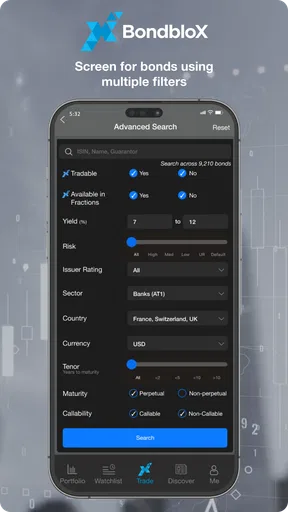
BondbloX is a digital investment platform focused on fractionalized bonds, allowing eligible users to access smaller portions of bonds instead of purchasing an entire bond lot. After creating an account and completing the required verification, users can browse available offerings, review key details such as maturity and yield, and place orders through the app. Availability depends on your country and investor eligibility.
Is BondbloX safe and regulated?
BondbloX uses account verification and security controls designed to protect user access and comply with applicable financial regulations. However, using the platform does not eliminate investment risk. Bond prices can change, issuers may fail to pay, and liquidity may be limited. Before investing, check the legal entity serving your region, read the offering documents, and confirm that the platform is authorized to operate where you live.
Who can use BondbloX, and what documents are required?
BondbloX is generally intended for verified investors who meet the platform’s age, residency, and regulatory requirements. During registration, you may be asked for government-issued identification, proof of address, tax information, and details about your investing experience or financial profile. Requirements can differ by jurisdiction, so downloading the app alone does not guarantee that you will be able to open an account or access every product.
What fees and risks should I consider before investing?
Before placing an order, review BondbloX’s current fee schedule carefully. Possible costs may include transaction, custody, withdrawal, currency-conversion, or other service charges, depending on the product and your location. Fractional bonds also carry normal fixed-income risks, including interest-rate changes, credit or default risk, price fluctuations, and difficulty selling before maturity. Always read the specific terms shown for each investment.
Can I sell my BondbloX investments whenever I want?
The ability to sell depends on the specific bond, the availability of buyers, and the market or trading facilities supported by BondbloX. Some products may offer secondary-market trading, while others may be more suitable for holding until maturity. Even when selling is available, an order may not execute immediately or at the price you expect. Check liquidity conditions, settlement times, and withdrawal rules before investing.


